Yoga at first light
Every morning begins with gentle practice — breath, warmth, and simple movement suited to thin air and cold hands. Nobody is asked to do more than their body offers that day.
Next journey — Gosaikunda, 4,380 m · 30 Oct Journeys run through the year — ask for dates
in Kathmandu
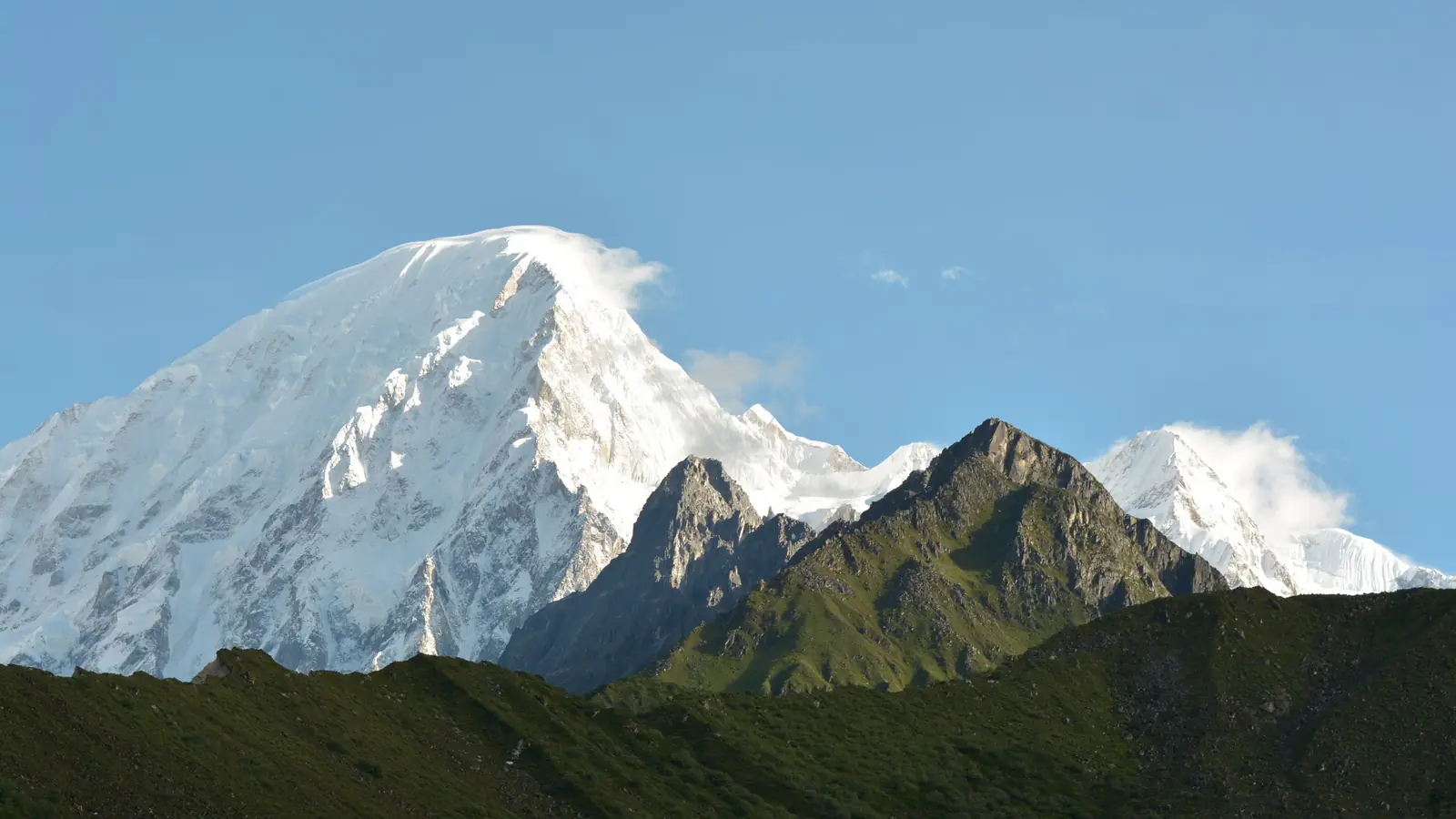
गोसाईंकुण्ड आध्यात्मिक यात्रा
Five days walking towards the lake where Shiva is said to have rested. Yoga at first light,
Himalayan sound healing as the cold comes down, and puja at the water.
What follows is kept as a record of it. We walk to Gosaikunda most years — write to us and we will tell you when the next one is set.
“Whatever brings you — tiredness, curiosity, or a longing for stillness — there is room for you on this path.”
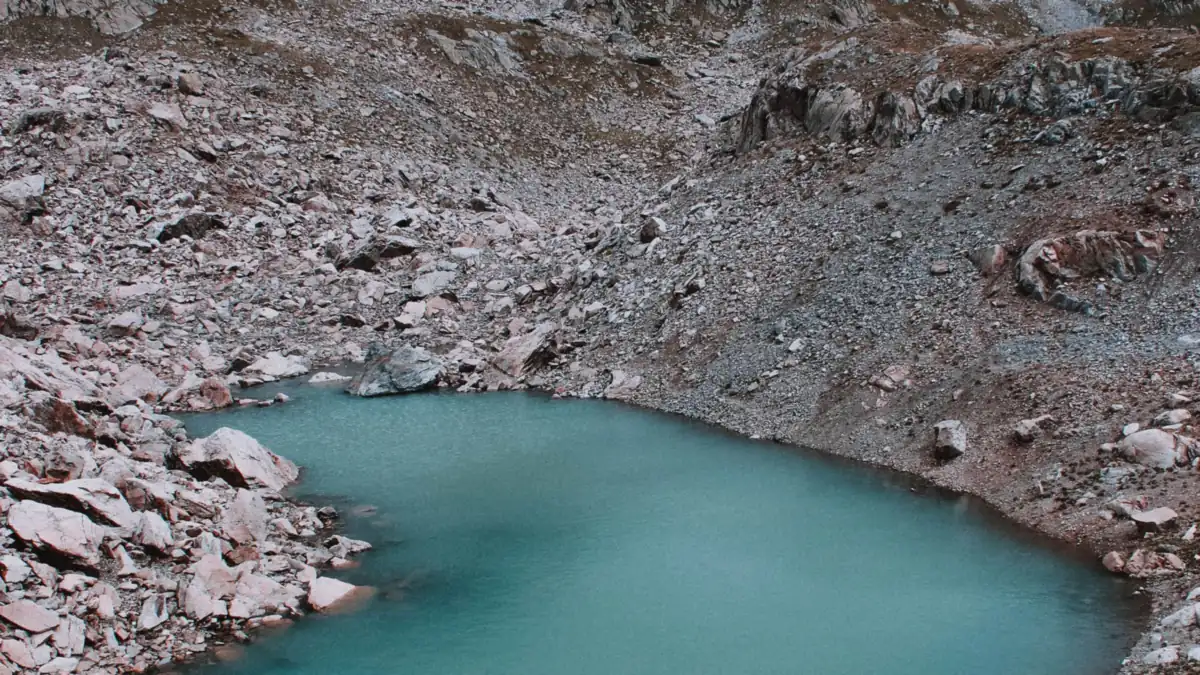
Gosaikunda is an alpine lake in Rasuwa district, inside Langtang National Park, resting at about 4,380 metres above the sea. It is the principal lake of a high glacial basin that holds more than a hundred smaller kunda — by tradition one hundred and eight of them — scattered across bare rock above the treeline.
The story told in these hills is that when the gods and demons churned the cosmic ocean and poison rose from it, Shiva drank the poison to save creation. His throat burned. He struck the mountain with his trident, and cold water rose to cool him. That water is Gosaikunda. Each year at Janai Purnima, on the full moon of the monsoon month, thousands of pilgrims climb here to bathe. Hindus and Buddhists both hold the lake holy.
We do not go as tourists to a viewpoint. We go the way people have gone for centuries — slowly, with the intention of arriving quiet.
Every morning begins with gentle practice — breath, warmth, and simple movement suited to thin air and cold hands. Nobody is asked to do more than their body offers that day.
As the light goes and the cold settles, the bowls and the gong are played. Lying still under blankets after a day of walking, rest comes easily.
Time is kept for sitting without instruction. At this altitude the quiet is unlike anything available in the city, and it does most of the work by itself.
At the water we offer puja, and a havan — the fire ceremony — is made. This is done in the ordinary Nepali way, without spectacle. You are welcome to take part or simply to sit nearby.
An evening is given to the songs and dances of these hills, shared by the people who live in them. It is one of the warmest parts of the journey.
On return to Kathmandu each guest receives a certificate of gratitude from the Foundation — not a qualification, simply our thanks for walking with us.
The route is the old one: up from Dhunche through rhododendron forest to Chandanbari, then over Lauribina to the lakes, and back down the same way. Walking days are five to seven hours at an unhurried pace, with long stops.
We leave the valley in the morning and drive north into Rasuwa, following the river up. The road takes most of the day. We arrive at Dhunche in the late afternoon, eat together, and sleep early.
Morning yoga, then the first walking day, climbing through oak, pine and rhododendron to the monastery settlement of Chandanbari, also called Sing Gompa. Sound healing in the evening.
The longest and highest day. The forest thins, then ends. Past Lauribina the land turns to rock and sky, and the first of the small lakes appear before Gosaikunda itself. We arrive in the afternoon and rest.
Yoga by the water in the morning. Puja and havan. Time to walk among the smaller kunda, to sit, to say nothing. Sound healing at the lake as the light goes, and cultural dance in the evening.
We come down the way we went up, which always feels like a different path. Depending on how the group is walking, the descent and the drive are made across one long day or two gentle ones — the sixth day, if we take it, is the one still to be confirmed. Certificates of gratitude are given in Kathmandu.
We would rather tell you the truth now than have you unwell at four thousand metres. None of what follows is meant to put you off. It is what we would tell a member of our own family.
Gosaikunda sits around 4,380 m. Most people feel the thin air on day three — shortness of breath on the climbs, a light headache, broken sleep, less appetite. That is ordinary. What is not ordinary is a headache that will not lift, vomiting, confusion or breathlessness at rest, and if any of that appears the only correct answer is to go down. We walk slowly on purpose, we drink far more water than feels necessary, and we will always choose your wellbeing over the schedule.
By late Kartik the nights above 3,300 m fall well below freezing, and the wind at the lakes is sharp even in sunshine. Bring warm layers, a hat, gloves, and a sleeping bag rated for sub-zero nights. Lodges are simple — a bed, a blanket, a shared dining room with a stove. Hot water is not always available.
You do not need to be an athlete, and you do not need previous trekking experience. You do need to be able to walk five to seven hours on a rough uphill path, on consecutive days, carrying a day pack. If you can walk briskly for two hours at home without difficulty, you will manage here.
If you live with a heart or lung condition, uncontrolled high blood pressure, diabetes, epilepsy, or you are pregnant, please talk with your doctor before booking, and tell us what they say. Bring any medicine you take in your day pack, not in the luggage. There is no pharmacy on the mountain and no road to reach one.
A pilgrimage with yoga, meditation and sound offered along the way, for rest, calm and cultural and spiritual experience. It is not medical care, it does not treat any illness, and it is not a substitute for the treatment your doctor has given you.
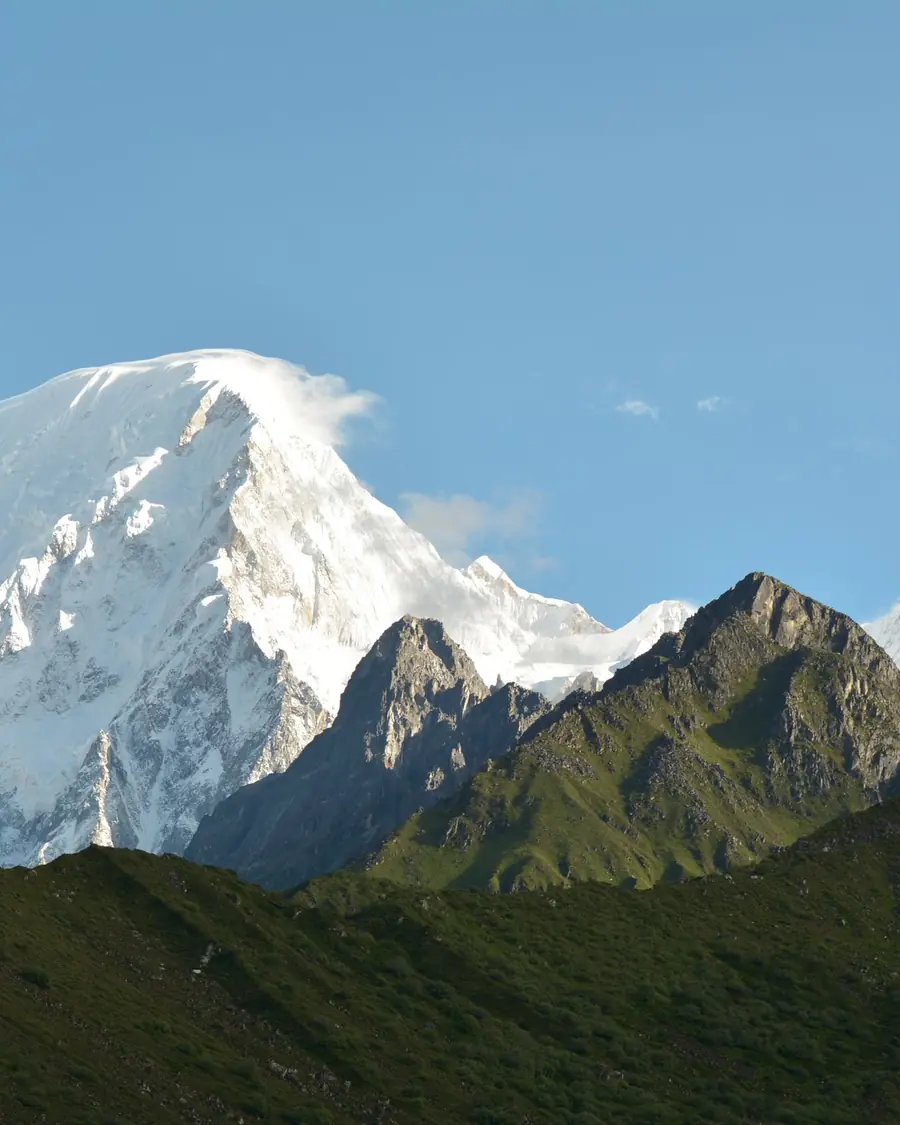
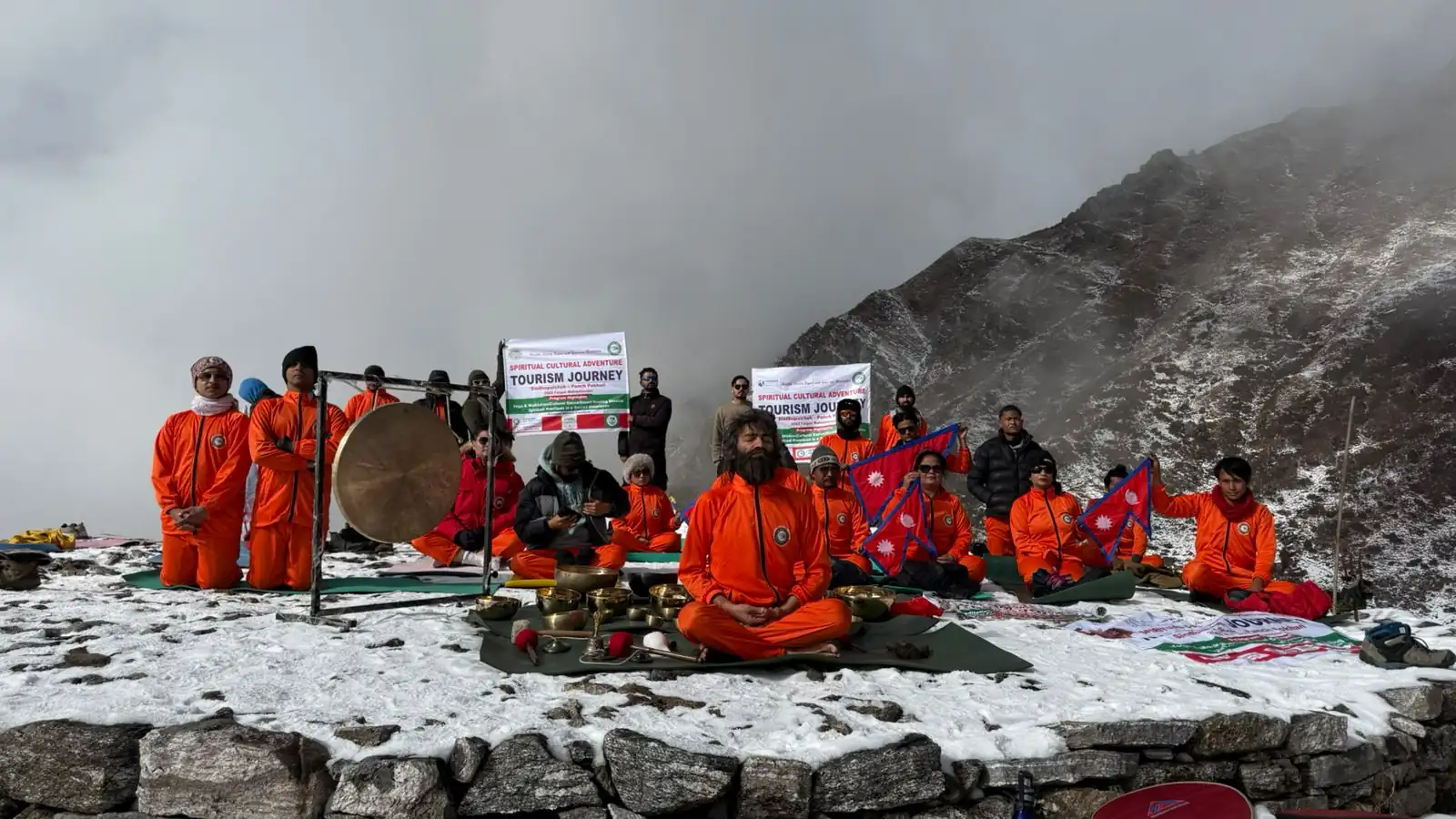
In 2024 the Foundation led a spiritual-tourism yoga camp to Gosaikunda, reported by two Nepali news outlets. In Falgun 2081 we carried a group to Panch Pokhari, the other great lake pilgrimage — that journey is the one photographed here, and it is the same practice on different ground.
We say this only so you know the path is familiar to us and that you will be looked after. Yogi Ji is a trekking guide certified by NATHM under the Ministry of Culture, Tourism and Civil Aviation, and holds a mountaineering certificate from the Department of Tourism for Mt. Ganchenpo, 6,378 m.
Not included: personal trekking gear, national park and permit fees where these apply, travel insurance, and anything you buy for yourself along the way. We will tell you the exact figures for permits when you write to us — they change from year to year and we would rather quote them correctly than approximately.
Places are kept small so the group stays quiet. Write to us on WhatsApp and we will tell you everything you need to know, without any hurry.