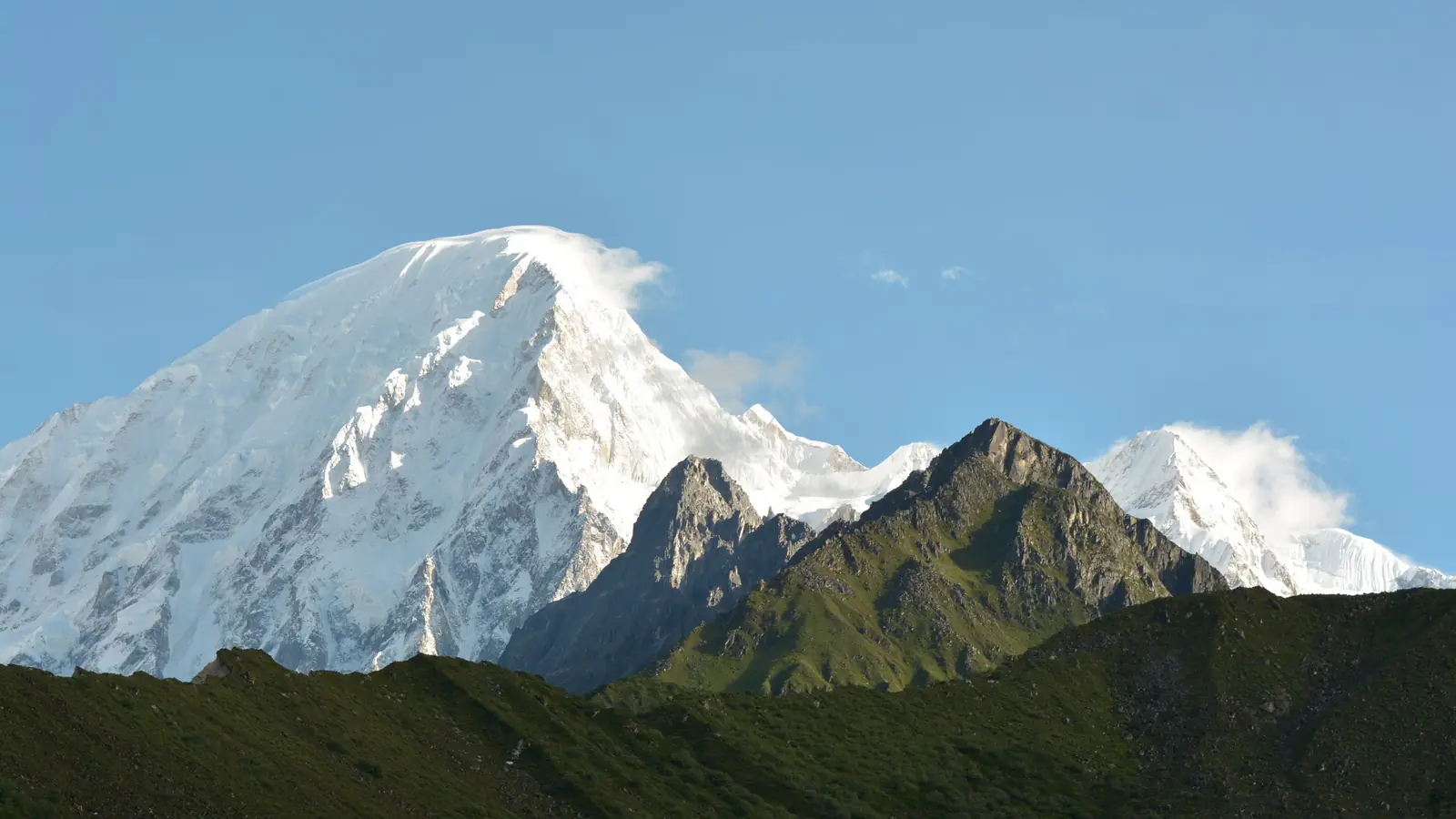
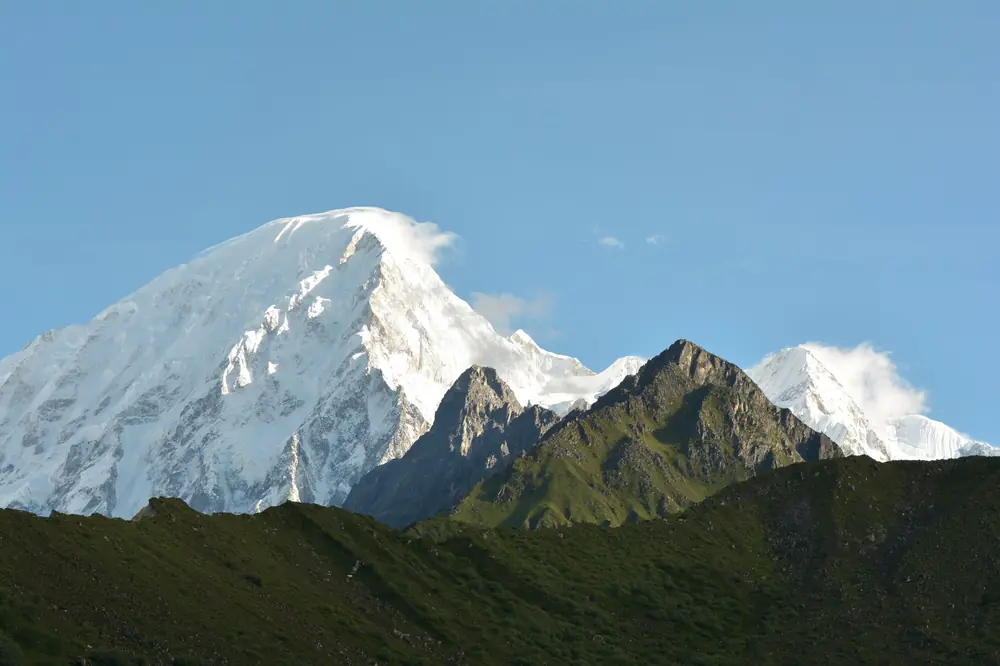
A snow-covered Himalayan peak catching first light above dark ridges at dawn
Retreats · Himalaya, Nepal

Yoga and sound healing retreats in Nepal

A few days of walking, practising and sitting quietly in the mountains — morning yoga, evening Himalayan sound healing, and long stretches where nothing is asked of you at all.

What this is

Not a resort with a timetable

A meditation retreat in Nepal can mean many things. Ours is a small group walking together into the Himalaya for five or six days, practising yoga each morning while the valley is still cold, sitting with the bowls each evening as the light goes, and spending the hours between simply moving through the mountains.

There is no spa, no schedule pinned to a wall, and no one keeping score of your attendance. You are not asked to be silent, to be vegetarian, to be flexible, or to believe anything. What is asked is that you walk at the group's pace and let the days be long.

The retreats are led by Yogi Ji, who is both a Yoga Alliance certified teacher and a NATHM-certified trekking guide — which matters more than it sounds. Plenty of people in Nepal can teach yoga. Fewer can teach yoga and also read the weather on a high pass and know when to turn a group around.

Everything is run in English or Nepali. You do not need to have walked in the Himalaya before, or to have practised yoga before.

The rhythm

The shape of a day

Every retreat we run keeps roughly this shape, whichever mountain we are on.

  1. First light

    Yoga, before the valley warms

    Gentle hatha practice with breath, suited to thin air and cold hands. Ninety minutes at most, usually outdoors if the weather allows, and nobody is asked to do more than their body offers that morning. Beginners are genuinely welcome; no previous yoga experience is needed.

  2. Morning

    Walking

    Five to seven hours on a rough uphill path, at an unhurried pace, with long stops. Porters carry the heavy loads; you carry a day pack with water, a layer and whatever you want to hand. Tea houses appear when they appear, and we stop at them.

  3. Afternoon

    Nothing in particular

    Arrive, put your bag down, drink something hot. Read, sleep, wash, talk to the family running the lodge, or sit outside and watch cloud come up the valley. It is left empty on purpose. The emptiness is not a gap in the schedule; it is most of the point.

  4. Dusk

    Himalayan sound healing

    As the cold comes down, the bowls, tingsha and gong are played while you lie under blankets. After a day of walking at altitude it is the easiest hour of the day to rest in. The session ends in silence, which is left unbroken.

  5. Evening

    Food, fire, and early beds

    Dal bhat, mostly, and as much of it as you want. Some evenings there is puja, or the songs and dances of whichever hills we are in, shared by the people who live there. Everyone sleeps early; the walking sees to that.

Open now

Gosaikunda Sacred Journey

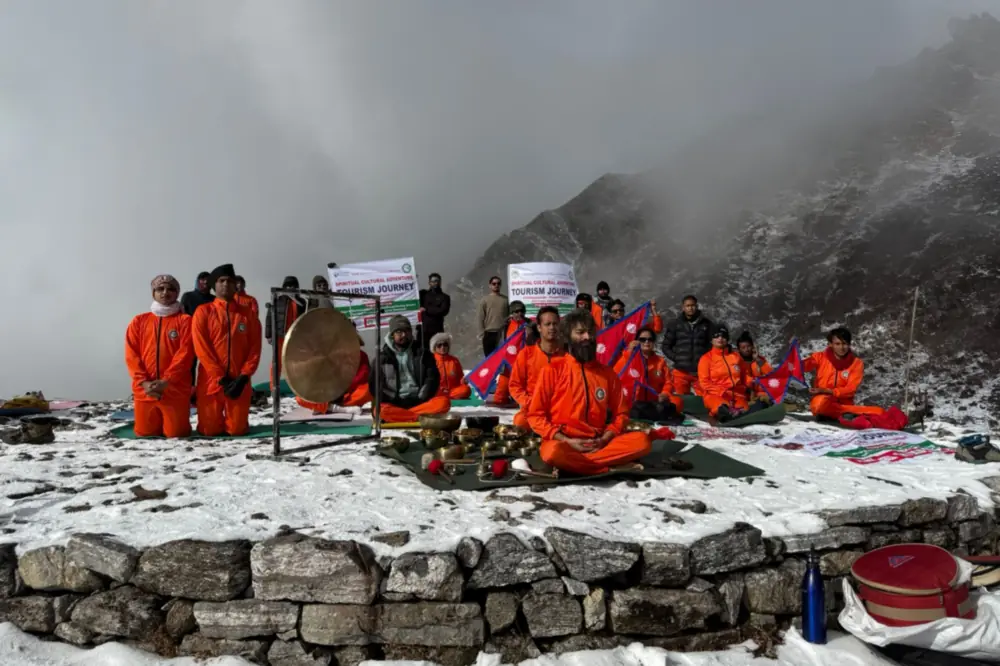
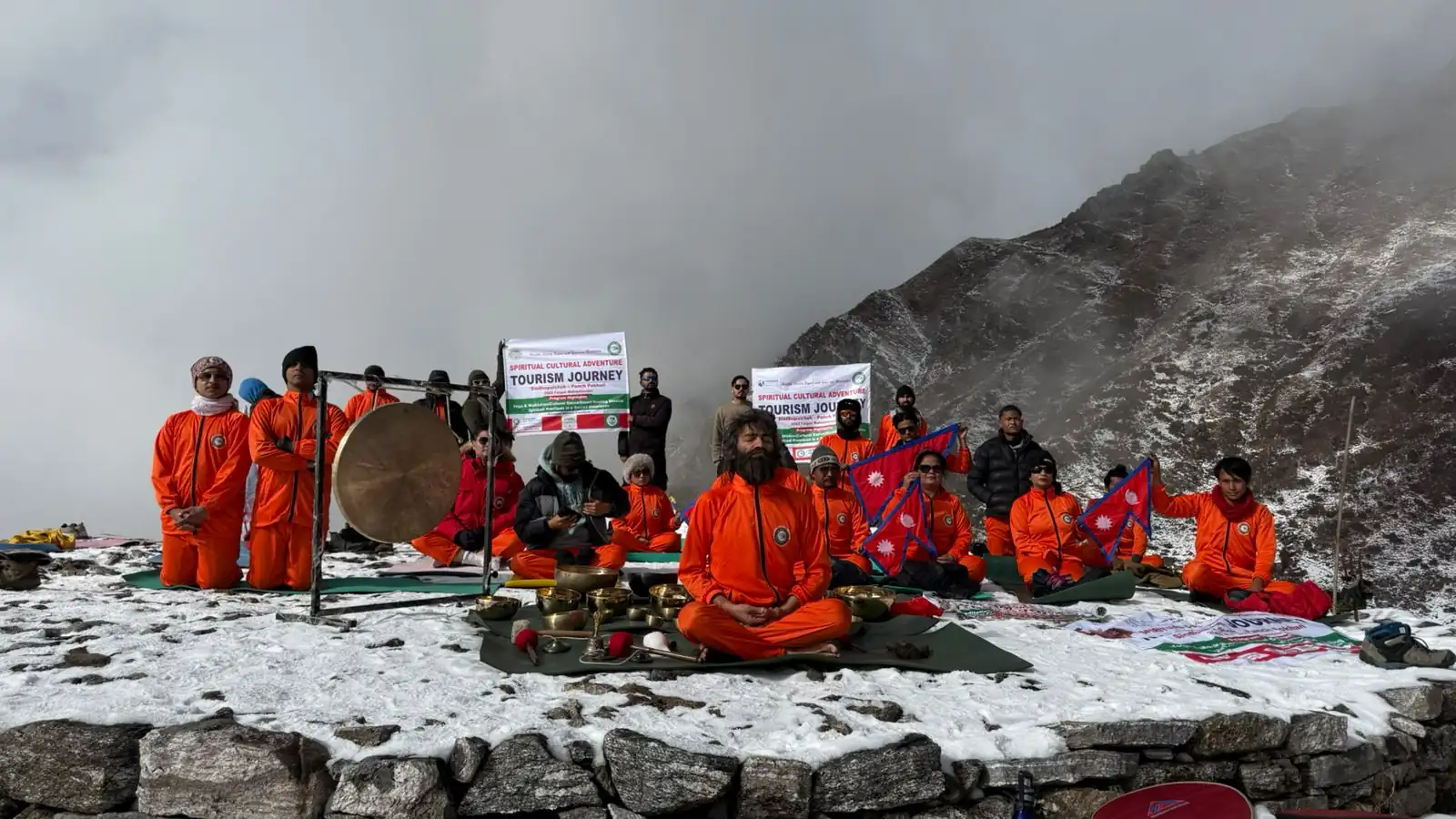
Participants of the Foundation's 2024 Gosaikunda retreat seated in snow around a gong and singing bowls
The 2024 retreat to Gosaikunda, reported by two Nepali news outlets.

Gosaikunda Sacred Journey

Five days to the sacred alpine lakes at about 4,380 metres in Rasuwa, where Shiva is said to have struck the mountain with his trident to cool his burning throat.

Dates
30 Oct – 3 Nov 2026Kartik 13–17, 2083. May extend by one day, still to be confirmed.
Contribution
NPR 40,000International guests, about USD 290. Guests from Nepal, NPR 25,000.
The contribution

What it carries, and what it does not

We quote permits and travel separately rather than folding them into a round number, because they change from year to year and we would rather be accurate than tidy.

Carried by the contribution

  • All meals from the first day to the last
  • Accommodation throughout, in simple mountain lodges
  • Transport from Kathmandu and back
  • Yoga clothing for the retreat
  • Every yoga, meditation and sound healing session
  • Puja, and havan where the place calls for it
  • Porters for the heavy loads
  • A certificate of gratitude on return

Not included

  • Flights to Nepal, and your visa on arrival
  • National park entry and trekking permits, quoted at the time
  • Travel and medical insurance, which must cover trekking to 5,000 m and helicopter evacuation
  • Personal trekking gear, though we will tell you exactly what to bring and where to rent it in Thamel
  • Anything you buy for yourself along the way
Before you decide

The honest practicalities

When to come

October and November are the clearest months and the reason our main retreat falls in Kartik. March to May is warmer, with rhododendron on the lower slopes. June to August is monsoon: green, quiet, and often clouded in, better for retreats inside the valley. December to February is cold and beautiful but high passes may hold snow.

How fit you need to be

You do not need to be an athlete and you do not need previous trekking experience. You do need to be able to walk five to seven hours on a rough uphill path on consecutive days. If you can walk briskly for two hours at home without difficulty, you will manage here.

Altitude, said plainly

At 4,380 m most people feel the thin air: shortness of breath, a light headache, broken sleep, less appetite. That is ordinary. A headache that will not lift, vomiting, confusion or breathlessness at rest is not, and the only correct answer is to go down. We walk slowly on purpose and will always choose your wellbeing over the schedule.

What a lodge is really like

A bed, a blanket, a shared dining room with a stove, and a shared bathroom. Hot water is not always available and there is no heating in the rooms. Bring a sleeping bag rated for sub-zero nights. Electricity for charging is usually available and usually costs a little.

Arriving in Nepal

Most nationalities can obtain a visa on arrival at Kathmandu airport. Come two or three days before the retreat begins if you can — it lets the flight wear off and gives time to rent anything missing. We are glad to give a sound session in those first days.

Insurance

Please arrange travel and medical insurance that explicitly covers trekking to at least 5,000 metres and helicopter evacuation. This is not a formality. There is no road to Gosaikunda, and a helicopter is the only way down for someone who cannot walk.

Food and diet

Dal bhat twice a day, with vegetables, eggs, noodles and soup available. Vegetarian is the norm rather than a request. Tell us in advance about allergies or a strict diet and we will tell you honestly whether the lodges on that route can manage it.

Talking with your doctor

If you live with a heart or lung condition, uncontrolled high blood pressure, diabetes, epilepsy, or you are pregnant, please speak with your doctor before booking and tell us what they say. Bring medicines in your day pack, not in the luggage.

What a retreat is, and is not

A pilgrimage with yoga, meditation and sound offered along the way, for rest, calm and cultural and spiritual experience. It is not medical care, it does not treat any illness, and it is not a substitute for the treatment your doctor has given you.

A Himalayan camp in snow, participants in saffron seated around a gong and an offering table
Made for your group

Private and custom retreats

If you are travelling with family or friends, or bringing a yoga group from abroad, we will shape a retreat around what you actually want — shorter days, a lower route, more sitting and less walking, or a week in one place rather than a trek at all.

Teachers bringing their own students are welcome. We can hold the sound sessions and the logistics while you keep your own teaching, or we can share the days between us. Tell us the shape you have in mind and roughly when, and we will tell you plainly whether we can do it well.

Questions people ask

Before you book

What is a yoga and sound healing retreat in Nepal like?

A retreat with Himalayan Wellness Foundation is five or six days walking in the Himalaya with a small group. Mornings begin with gentle yoga and breath, the middle of the day is spent walking five to seven hours at an unhurried pace, and each evening ends with a Himalayan sound healing session played on singing bowls, tingsha and gong. Accommodation is in simple mountain lodges and all meals, transport and sessions are included.

Do I need trekking or yoga experience?

No. Beginners are welcome at every session and many guests have never attended a yoga class before. You do need reasonable walking fitness: five to seven hours on a rough uphill path on consecutive days, carrying a day pack. If you can walk briskly for two hours at home without difficulty, you will manage.

When is the best time for a retreat in Nepal?

October and November give the clearest mountain views and the most settled weather, which is why our main retreat falls then. March to May is warmer with rhododendron in flower. The monsoon months of June to August are green and quiet but often clouded in, and suit retreats inside the Kathmandu valley better than high routes.

How much does a Himalayan retreat cost?

The Gosaikunda Sacred Journey is offered at NPR 40,000 for international guests, about USD 290, and NPR 25,000 for guests from Nepal. That carries food, accommodation, transport from Kathmandu, yoga clothing, porters and every session. National park permits, insurance, personal gear and flights to Nepal are separate and quoted honestly at the time.

Is the retreat run in English?

Yes. Sessions, instructions and everything practical are given in English or Nepali, whichever the group prefers, and often both. Yogi Ji speaks both. Write to us in either.

What should I bring?

Warm layers, a hat and gloves, a sleeping bag rated for sub-zero nights, broken-in walking boots, a day pack, a water bottle with a purification method, sunscreen and sunglasses, and any medicine you take. Yoga clothing is provided. Anything missing can be bought or rented cheaply in Thamel, and we will happily go with you.

Anything still unclear is worth asking. We would rather answer twenty questions now than have you arrive unsure.